Outdoor Exploration
If indeed nature is the holistic salve that soothes weary humans, then opportunities for a blissful rejuvenation of mind, body and spirit are unparalleled among the many natural wonders of Franklin County.
Visitors often experience an “ah ha” moment upon discovering Franklin County, and it’s no wonder. The county’s vast natural resources are recognized not just on the local level, but also regionally and nationally as significant and even mysterious.
Ecotourists, take note—research from the Apalachicola National Estuarine Research Reserve (ANERR), one of 25 sites nationwide designated by the National Oceanic and Atmospheric Administration as a research reserve, indicates that more species of native plants and animals are found within this region than any other comparable regions within the United States.
According to ANERR, the highest biodiversity of species in the United State is found within the central Florida Panhandle, along the Apalachicola River. The Florida Panhandle is one of the nation’s six “biological hot spots,” along with Hawaii, the southern Appalachians, the San Francisco Bay area, the Death Valley region and southern California.
The Apalachicola Riverkeeper organization fact sheet notes that the Apalachicola River basin stands out as one of the last ecosystems that retains much of its natural resources. The significance of this fact can be shown in sheer numbers. Some 131 species of fish live in the river system (more than any other river in Florida). The river drainage basin boasts more than 1300 species of plants--103 0f which are threatened or endangered--and more than 50 species of mammals, including the threatened Florida black bear, the endangered West Indian Manatee and the Indiana and gray bats. Additionally, the river and bay watershed is one of the most important bird habitats in the southeastern U.S.
Given the ecological significance of the region, it’s no surprise to learn that more than 87 percent of Franklin County is either state or federally protected land. This bodes well for visitors, as numerous state parks and state forests, national wildlife preserves, national forests and wildlife management areas provide ample opportunities to commune with nature and explore the county’s many diverse ecosystems.
The shallow areas of Apalachicola Bay are perfect for sightseeing and ecotourism excursions by canoe and kayak. More than a dozen local outfitters currently offer ecotours on the Apalachicola Bay and its many small creeks and tributaries. The quiet nature of canoe and kayak exploration increases opportunities for viewing local wildlife such as fish, birds, river otters and manatees.
Franklin County provides guided kayak, canoe and boat tours. In addition, they have a rental resource for sailboats, powerboats, kayaks and canoes. Among the popular guided boat excursions are shelling tours to the outer barrier islands, informative historical tours of the estuarine system, dolphin encounter cruises and river, bird watching and sunset tours.
Franklin County’s fishing adventures include inshore bay trips, flats and tarpon fishing and deep-sea charters. Apalachicola’s local estuary delights in every opportunity to educate children about the local environment, and they specialize in providing many recreational adventures just for kids.
Because the oystering industry plays a vital role in the area’s history and economy, several area providers offer guided oystering tours on Apalachicola Bay. Based out of Apalachicola, provides an “oyster culture tour” which takes visitors out on an authentic oyster boat, with a guide who demonstrates how to tong, cull and harvest oysters in the same way local oystermen have been doing for 150 years.
When salty winds and surf song beckon, sailing aficionados may choose from a variety of sailing adventures.
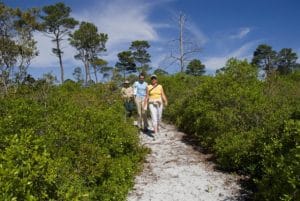
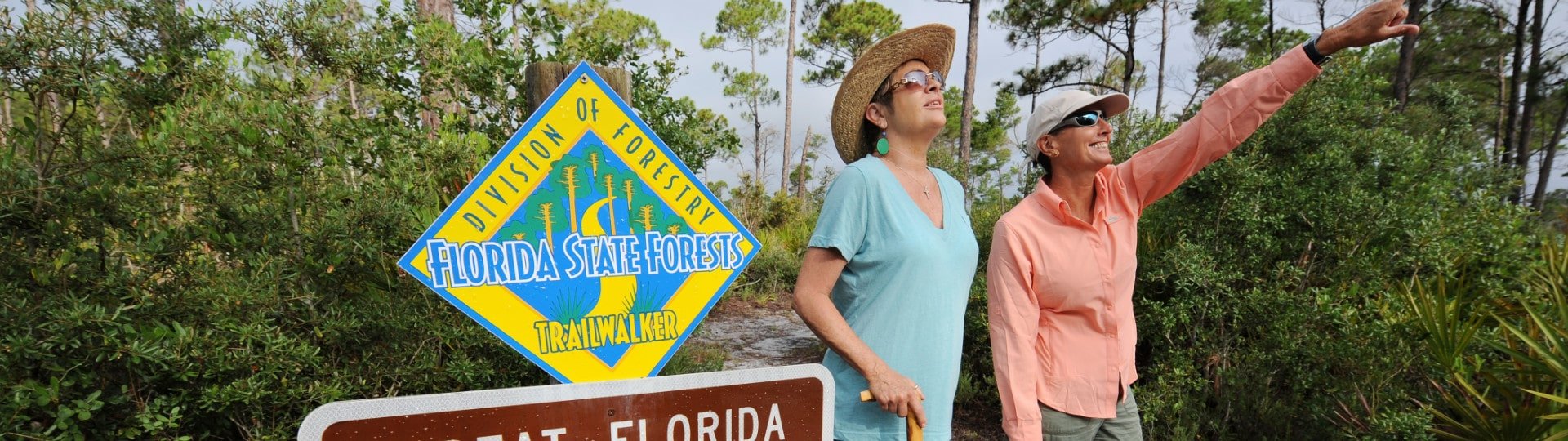
With hundreds of thousands of protected acres to explore, hiking opportunities abound in Franklin County.
At Tate’s Hell State Forest, the High Bluff Coastal Hiking Trail winds six miles through the forest, often paralleling St. George Sound. Informative visitor education exhibits are located along the trail and cover fire, coastal scrub ecosystems and the turpentine industry. Of special note, hikers can see the natural phenomenon of the dwarf cypress trees, which grow no more than 15 feet tall even though they are 150 years old, and are unique to the area.
These cypress wetlands coexist with five sulfur springs and several ponds formed by old borrow pits. Along the way, hikers can view these unique trees and the hydrology restoration program from an elevated boardwalk and observation tower.
The Florida Division of Forestry estimates Tate’s Hell Forest contains more than 107,000 acres of hydric communities – prairie, wet Flatwoods, strand swamp, bottomland, bay gall and flood plain swamp – each providing ample plant-viewing opportunities.
Among the most unusual are native pitcher plants, and the world’s largest concentration of these plants is found here. The rustic Deep Creek Birding Trailgives quick access to thesemysterious pitcher plant prairies, also known as “bugle flats.” Covering hundreds of acres, these lowland areas share forest terrain with other carnivorous plants like glistening sundews, butterworts and bladderworts.
Tate’s Hell also allows off-highway vehicle (OHV) use in designated areas only. OHV use requires an OHV decal that can be obtained from the state forest office.
St. Vincent National Wildlife Refuge is a 12,350-acre undeveloped barrier island, located 22 miles offshore from Apalachicola. Here, hikers can explore the island’s 14 miles of beaches and 80 miles of sand roads, often without seeing a manmade structure or even another person. Because of its relative isolation, the island is particularly popular with photographers and shell collectors.
Also located on a barrier island, St. George Island State Park boasts nine miles of undeveloped beaches and high dunes, surrounded by the Gulf of Mexico and Apalachicola Bay. Occupying nearly 2,000 acres, park terrain is a combination of sandy coves, salt marshes, shady pines and oak forest.
Inside the state park, a two-mile marked trail along the bayside is especially popular among birders, and a series of trails and boardwalks throughout the park provides many wildlife-sighting opportunities. Raccoons, ghost crabs and loggerhead turtles share the St. George stage with birds during different seasons of the year.
Located on Alligator Point where Ochlocknee Bay meets Apalachee Bay is Bald Point State Park. Bald Point’s coastal marshes pine Flatwoods and oak thickets foster a diversity of biological communities that make the park a popular destination for hikers. A newly constructed observation boardwalk overlooks prime areas for viewing rare Florida black bears, which occasionally swim at the beach. This area also is popular for windsurfing, hiking, canoeing, kayaking and bird watching.
Cycling is a great way to take in the scenic beauty of St. George Island, and cyclists can explore via the island’s paved bike trail, which winds for four miles among the dunes from 11th Street East to The Plantation on the western end. This trail also will be extended on the eastern end to St. George Island State Park in the spring of 2008. Within The Plantation, another five miles of bike trails are available to guests (in addition to tennis courts and a swimming pool). Island visitors are free to bring their personal bikes, and bike rentals also are readily available.
In quaint Apalachicola, cycling is the perfect mode of transportation for exploring downtown and the historic district. Town parks, the working riverfront and historic homes lining quiet streets are best absorbed at a slow pace. Some local accommodations provide bikes as a guest amenity, and bikes also can be rented locally.
With more than 200 miles of shoreline countywide, beach activities abound, particularly on St. George Island, at Alligator Point and at Carrabelle Beach. Hobie Cats, sea kayaks and boogie boards are all readily available for rent, or visitors are welcome to bring their own. For those in a more relaxed frame of mind, beach floats; inner tubes and standard beach-going paraphernalia can be purchased at many area beach shops.